L O A D I N G

Dr. Ahmed Mansour

Bone Lengthening Surgery: Correcting Limb Length Discrepancies Safely

Bone Lengthening Surgery: Correcting Limb Length Discrepancies Safely
  • Dr. Ahmed Mansour

Bone Lengthening Surgery: Correcting Limb Length Discrepancies Safely

Limb length discrepancies—whether congenital, post-traumatic, or developmental—can cause significant functional limitations, gait abnormalities, and secondary joint problems. Bone lengthening surgery utilizes the body's remarkable regenerative capacity to gradually create new bone, correcting discrepancies while preserving joint function. Modern techniques have dramatically improved precision, reduced complications, and expanded applications.

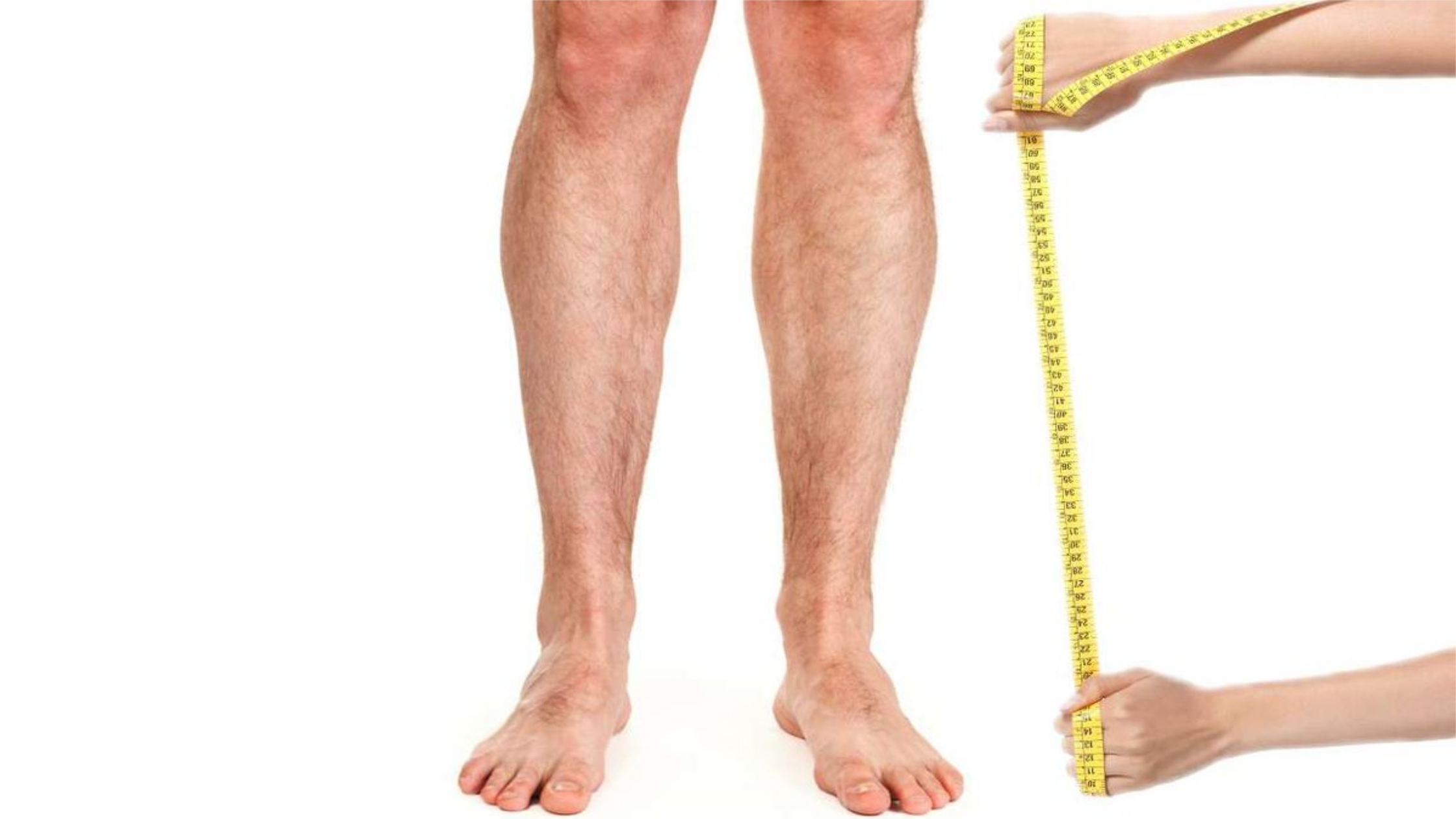
Precise measurement of limb length discrepancy
Accurate measurement is essential for planning appropriate lengthening amounts.
Distraction Osteogenesis: The Biological Principle

The Ilizarov method, based on distraction osteogenesis, involves surgical bone division (osteotomy) followed by gradual separation of bone segments. This controlled tension stimulates new bone formation in the gap—essentially growing bone. The standard rate is 1mm per day, divided into smaller increments. The process requires careful monitoring of both bone formation and soft tissue adaptation.

  • Biological phases: latency, distraction, consolidation
  • Optimal distraction rate: 1mm daily in divided increments
  • Monitoring: radiographic, clinical, and sometimes ultrasound
Internal vs. External Lengthening Devices

Traditional external fixators (like circular Ilizarov or monolateral frames) allow adjustment but are bulky and carry pin site infection risk. Newer internal lengthening nails contain magnetic or mechanical mechanisms activated externally to gradually lengthen inside the bone. Choice depends on amount of lengthening needed, bone diameter, patient age, and surgeon experience.

X-ray showing internal lengthening nail in femur
Internal lengthening devices offer cosmetic advantages and reduced infection risk.
"Bone lengthening transforms not just limb length but patients' lives—correcting gait, preventing secondary arthritis, and in height augmentation cases, often profoundly impacting self-image and confidence." — International Limb Lengthening Conference, 2025 Proceedings
Comprehensive Management: Beyond the Surgery

Successful lengthening requires meticulous attention to physical therapy throughout the process. Joint mobility must be preserved through regular range-of-motion exercises. Muscle strengthening addresses inevitable atrophy. Nutritional optimization supports bone formation. Psychological support helps patients cope with the prolonged treatment process and temporary disability.

  • Physical therapy protocol: daily during distraction phase
  • Nutritional support: protein, calcium, vitamin D optimization
  • Psychological aspects: coping with extended treatment timeline
Tags: Arthroscopy