L O A D I N G

Dr. Ahmed Mansour

Bow Legs in Adults: Causes, Symptoms, and Advanced Treatment Options

Bow Legs in Adults: Causes, Symptoms, and Advanced Treatment Options
  • Dr. Ahmed Mansour

Bow Legs in Adults: Causes, Symptoms, and Advanced Treatment Options

Adult genu varum, commonly called bow legs, involves outward curvature of the legs that causes knees to remain apart even when ankles are together. While often considered a pediatric condition, adult-onset or persistent bowing can lead to progressive knee arthritis, pain, and mobility limitations. Modern orthopedic approaches now offer effective solutions ranging from bracing to surgical realignment.

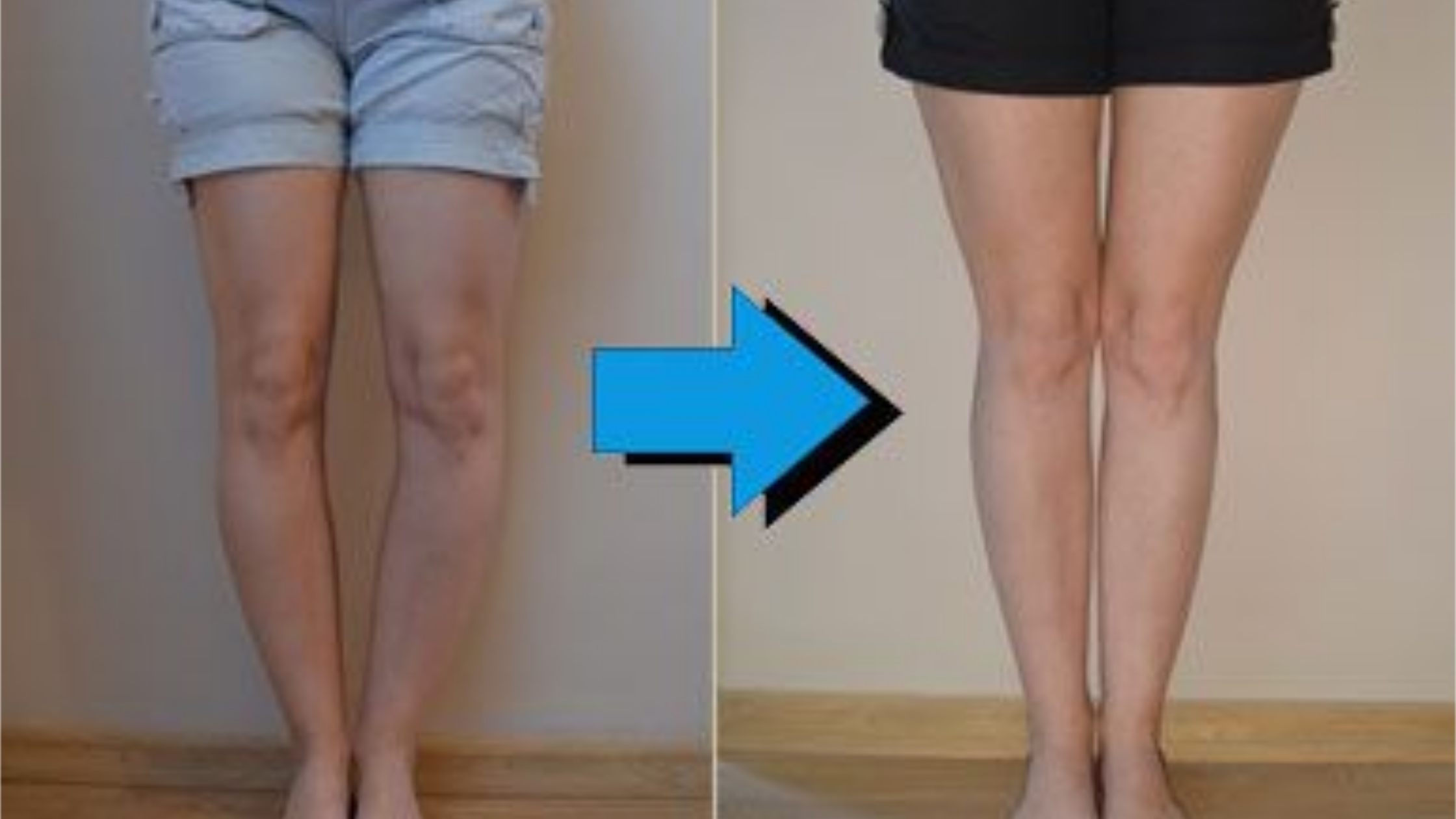
Adult demonstrating bow leg alignment during standing
Adult genu varum involves measurable separation between knees when ankles are together.
Causes and Progression in Adulthood

Adult bow legs may result from untreated childhood conditions, progressive osteoarthritis (particularly in the medial knee compartment), metabolic bone diseases like Paget's disease, or trauma affecting growth plates. The mechanical axis deviation places uneven stress on knee cartilage, accelerating wear on the inner side while relatively sparing the outer compartment—a pattern that often leads to painful, progressive arthritis.

  • Primary osteoarthritis with varus progression
  • Metabolic bone disorders affecting mineralization
  • Post-traumatic growth disturbances
Comprehensive Diagnostic Evaluation

Assessment begins with full-length standing X-rays (hip-to-ankle) to measure mechanical axis deviation, joint space narrowing, and overall limb alignment. Advanced imaging like CT with 3D reconstruction may be used for surgical planning. Gait analysis helps quantify functional limitations, while arthritis staging determines appropriate interventions from joint preservation to replacement.

Medical imaging showing bow leg alignment and joint spaces
Full-length standing X-rays are essential for accurate measurement of bow leg deformity.
"Adult bow leg correction isn't merely cosmetic—it's a functional restoration that redistributes joint forces to preserve native cartilage and delay or prevent the need for joint replacement." — Dr. Ahmed Mansour, Orthopedic Specialist
Treatment Spectrum: From Bracing to Surgery

For mild cases with minimal arthritis, unloader braces may redistribute weight from damaged medial compartments. Moderate deformities in younger patients may benefit from osteotomy—surgical realignment that corrects the mechanical axis. In advanced arthritis with significant deformity, total knee replacement with correction of alignment provides both pain relief and functional improvement.

  • Unloader bracing for mild to moderate symptoms
  • High tibial osteotomy for joint preservation
  • Total knee arthroplasty with alignment correction
Tags: Orthopedic Technology